Entry XLIX – March

In Winter
Robert Wallace

It is hard, inland, in winter.
When the fields are motionless in snow
to remember waves, to remember the wide, sloshing immensity

of the Atlantic, continuous, green in the cold, taking snow
or rain into itself,

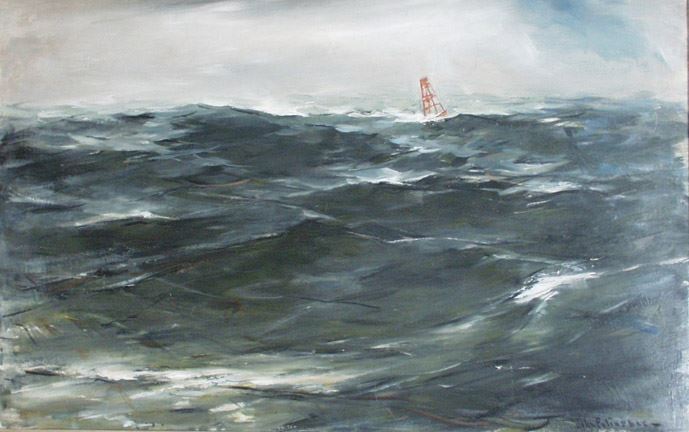
to realize the endurance of the tilting bell buoy
(hour by hour, years through) that clangs, clangs,

from land; even in storm and night-howling
snow, wet, red, flashing
to mark the channel. Some things
are, even if no one comes.
13321611_1689202038021019_2142326571189921147_n.jpg

Entry XLVI – February

Ungainly Things
Robert Wallace

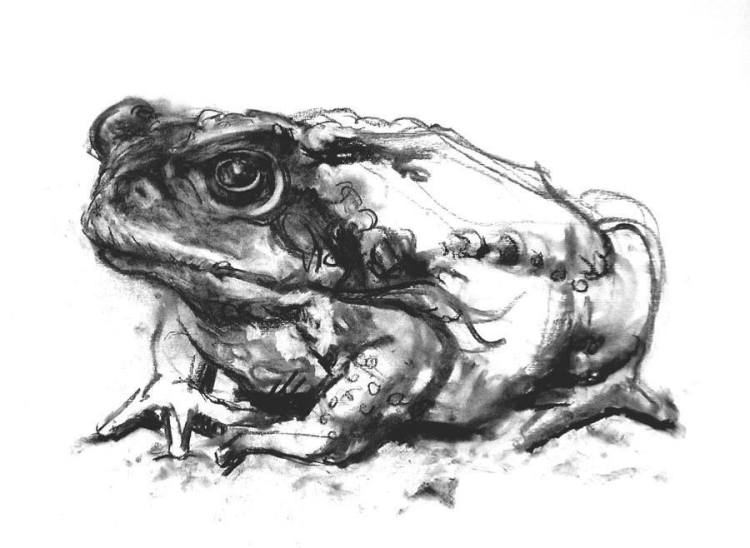
A regular country toad—pebbly,
squat,
shadow-green
as the shade of the spruces
in the garden
he came from—rode
to Paris in a hatbox
to Lautrec’s
studio (skylights
on the skies of Paris)
and stared
from searchlight eyes,
dim yellow; bow-armed,
ate
cutworms from a box,
hopped
occasionally
among the furniture and easels,
while the clumsy little painter
studied
him in charcoal
until he was beautiful.
One day
he found his way
down stairs toward the world
again,
into the streets of Montmartre,
and, missing him, the painter-dwarf
followed
peering among cobbles,
Laughed at, searching
until long past dark
the length of the Avenue Frochot,
over and over,
for the fisted, marble-eyed
fellow
no one would ever see again
except
in sketches that make ungainly things beautiful.

13325449_1689205494687340_120975562170764000_n.jpg

Entry XXXVII – December

Giacometti’s Dog
Robert Wallace

Lopes in bronze:
scruffy, 
thin. In
the Museum of Modern Art
head
down, neck long as sadness
lowering to hanging ears
– he’s eyeless-
that hear
nothing, and the sausage
muzzle
that leads him as
surely as eyes:
he might
be
dead, dried webs or clots of flesh
and fur
on the thin, long bones- but
isn’t, obviously
is obviously
traveling intent on his
own aims: legs
lofting
with a gayety the dead aren’t known
for, Going
onward in one place,
he doesn’t so much ignore
as not recognize
the well-
dressed Sunday hun-
dreds who passing, pausing make
his bronze
road
move. Why
do they come to admire
him?
They wouldn’t care for real dogs
less raggy
than he
is? It’s his tragic
insouciance
bugs them? or is
it that art can make us
cherish
anything- this command
of shaping and abutting space-
that makes us love
even mutts,
even the world, accep
even
the starry wheels by which we’re hurled
toward death, having
the rocks and
wind for comrades?
It’s not this starved hound,
but Giacometti seeing
him we see.
We’ll stand in line all day
to see one man
love anything enough.

13346814_1691030241171532_4934493298762178754_n.jpg