Entry XIII – January

13920795_1715895708684985_7478766707833357997_n.jpg
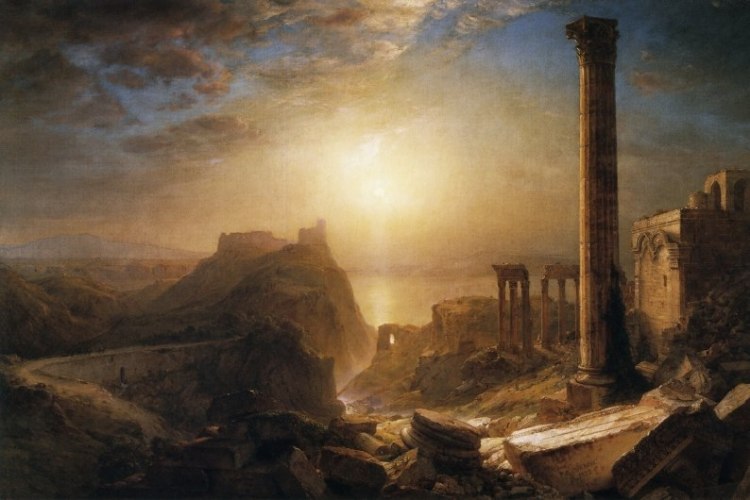
Elegy in a Country Courtyard
G.K. Chesterton
The men that worked for England
They have their graves at home:
And birds and bees of England
About the cross can roam.
But they that fought for England,
Following a falling star,
Alas, alas for England
They have their graves afar.

And they that rule in England,
In stately conclave met,
Alas, alas for England
They have no graves as yet.

 

Entry XI – January

13920756_1717274185213804_5753064188689164609_n.jpg

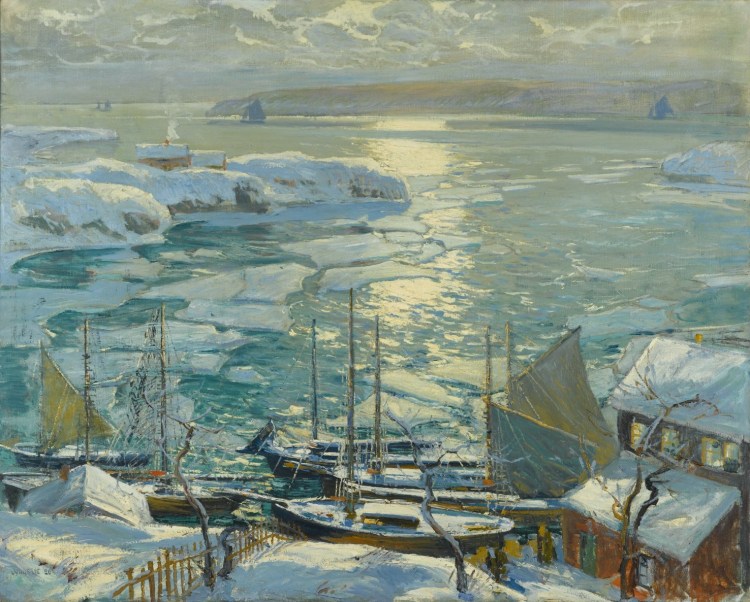
A Barefoot Boy

James Whitcomb Riley

A barefoot boy! I mark him at his play —
For May is here once more, and so is he, —
His dusty trousers, rolled half to the knee,
And his bare ankles grimy, too, as they:
Cross-hatchings of the nettle, in array
Of feverish stripes, hint vividly to me
Of woody pathways winding endlessly
Along the creek, where even yesterday
He plunged his shrinking body — gasped and shook —
Yet called the water ‘warm,’ with never lack
Of joy. And so, half enviously I look
Upon this graceless barefoot and his track, —
His toe stubbed — ay, his big toe-nail knocked back
Like unto the clasp of an old pocketbook.

Entry X – January

13932727_1719726761635213_7860351182195493966_n.jpg

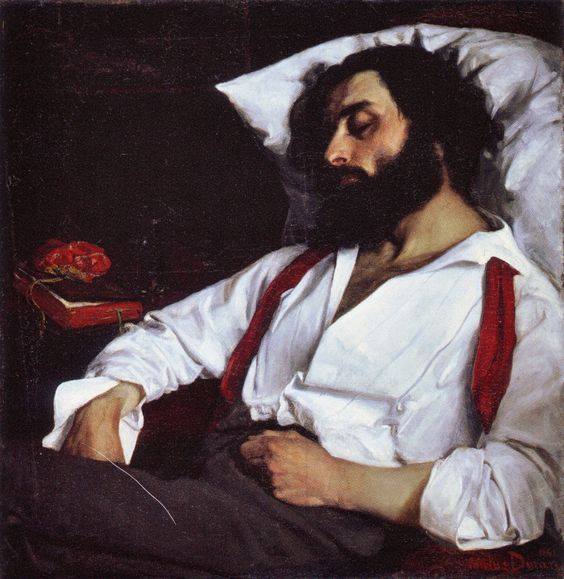
III. “For these of old the trader”
A.E. Housman

For these of old the trader
Unpearled the Indian seas,
The nations of the nadir
Were diamondless for these;

A people prone and haggard
Beheld their lightnings hurled:
All round, like Sinai, staggered
The sceptre-shaken world.

But now their coins are tarnished,
Their towers decayed away,
Their kingdom swept and garnished
For haler kings than they;

Their arms the rust hath eaten,
Their statutes none regard:
Arabia shall not sweeten
Their dust, with all her nard.

They cease from long vexation,
Their nights, their days are done,
The pale, the perished nation
That never see the sun;

From the old deep-dusted annals
The years erase their tale,
And round them race the channels
That take no second sail.

Entry VII – December

display_image-1
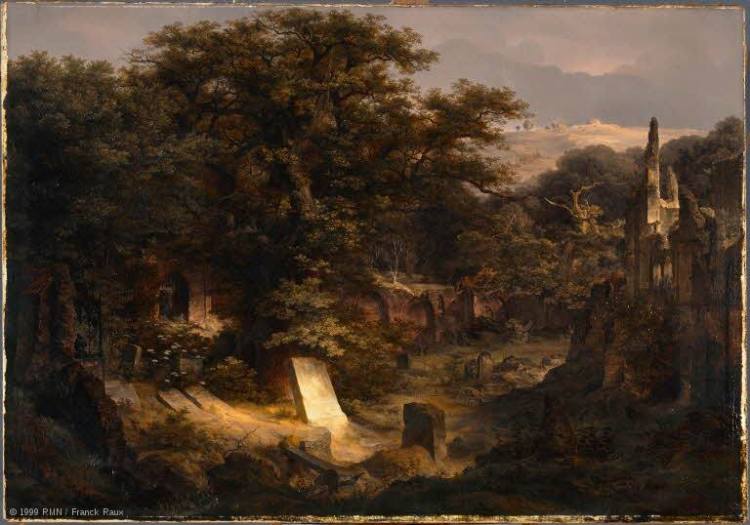
Brief reflection on killing the Christmas carp
Miroslav Holub
You take a kitchen-mallet
and a knife
and hit
the right spot, so it doesn’t jerk, for
jerking means only complications and reduces profit.
And the watchers already narrow their eyes, already admire the
            dexterity,
already reach for their purses. And paper is ready
for wrapping it up. And smoke rises from chimneys.
And Christmas peers from windows, creeps along the ground
and splashes in barrels.
Such is the law of happiness.
I am just wondering if the carp is the right creature.
A far better creature surely would be one
which—stretched out—held flat—pinned down—
would turn its blue eye
on the mallet, the knife, the purse, the paper,
the watchers and the chimneys
and Christmas,
And quickly
say something. For instance
These are my happiest days; these are my golden days.
Or
The starry sky above me and the moral law within me,
Or
And yet it moves.
Or at least
Hallelujah!

Entry VI – December

14907578_1755347061406516_8039281856775426990_n

XIII
A.E. Housman

I lay me down and slumber
And every morn revive.
Whose is the night-long breathing
That keeps a man alive?

When I was off to dreamland
And left my limbs forgot,
Who stayed at home to mind them,
And breathed when I did not?

— I waste my time in talking,
No heed at all takes he,
My kind and foolish comrade
That breathes all night for me.

Entry V – December

14600922_1755354021405820_209207764949253194_n

XVI
A.E. Housman

It nods and curtseys and recovers
When the wind blows above,
The nettle on the graves of lovers
That hanged themselves for love.

The nettle nods, the wind blows over,
The man, he does not move,
The lover of the grave, the lover
That hanged himself for love.

Entry IV – December

15230710_1767425626865326_6351505587985115226_n

A Red, Red Rose
Robert Burns

O my Luve is like a red, red rose
That’s newly sprung in June;
O my Luve is like the melody
That’s sweetly played in tune.

So fair art thou, my bonnie lass,
So deep in luve am I;
And I will luve thee still, my dear,
Till a’ the seas gang dry.

Till a’ the seas gang dry, my dear,
And the rocks melt wi’ the sun;
I will love thee still, my dear,
While the sands o’ life shall run.

And fare thee weel, my only luve!
And fare thee weel awhile!
And I will come again, my luve,
Though it were ten thousand mile.

Entry II – December

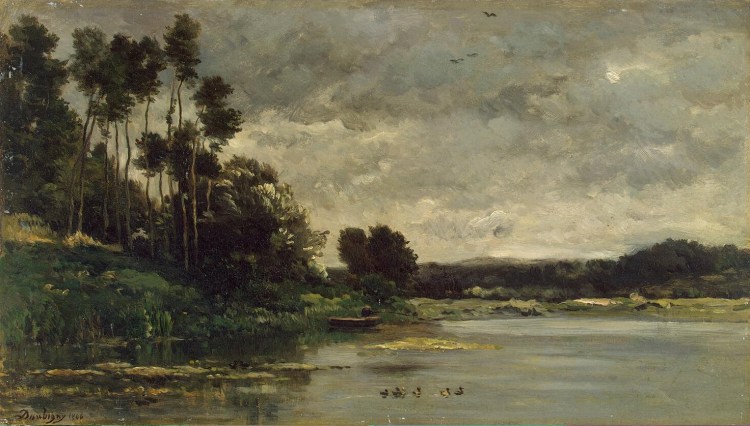
daubigny_charles-francois-zzz-river_bank

On Seeing the Wind at Hope Mansell
Geoffrey Hill

Whether or not shadows are of the substance
such is the expectation I can
wait to surprise my vision as a wind
enters the valley: sudden and silent
in its arrival, drawing to full cry
the whorled invisibilities, glassen towers
freighted with sky-chaff; that, as barnstorming
powers, rammack the small
orchard; that well-steaded oaks
ride stolidly, that rake the light-leafed ash,
that glowing yew trees, cumbrous, heave aside.
Amidst and abroad tumultuous lumina,
regents, reagents, cloud-fêted, sun-ordained,
fly tally over hedgerows, across fields.

Entry I – November

15107192_1765043883770167_6905967614065484311_n

Address to A Child During A Boisterous Winter Evening
Dorothy Wordsworth

What way does the wind come? What way does he go?
He rides over the water, and over the snow,
Through wood, and through vale; and o’er rocky height,
Which the goat cannot climb, takes his sounding flight;
He tosses about in every bare tree,
As, if you look up, you plainly may see;
But how he will come, and whither he goes,
There’s never a scholar in England knows.