Entry LII – April

The Wise
Countee Cullen

Dead men are wisest, for they know
How far the roots of flowers go,
How long a seed must rot to grow.

Dead men alone bear frost and rain
On throbless heart and heatless brain,
And feel no stir of joy or pain.

Dead men alone are satiate;
They sleep and dream and have no weight,
To curb their rest, of love or hate.

Strange, men should flee their company,
Or think me strange who long to be
Wrapped in their cool immunity.

13321636_1688399211434635_3368969527707211228_n

Entry L – March

Jabberwocky
Lewis Carrol

’Twas brillig, and the slithy toves
Did gyre and gimble in the wabe: 
All mimsy were the borogoves,
And the mome raths outgrabe.

“Beware the Jabberwock, my son!
The jaws that bite, the claws that catch!
Beware the Jubjub bird, and shun
The frumious Bandersnatch!”

He took his vorpal sword in hand;
Long time the manxome foe he sought—
So rested he by the Tumtum tree
And stood awhile in thought.

And, as in uffish thought he stood,
The Jabberwock, with eyes of flame,
Came whiffling through the tulgey wood,
And burbled as it came!

One, two! One, two! And through and through
The vorpal blade went snicker-snack!
He left it dead, and with its head
He went galumphing back.

“And hast thou slain the Jabberwock?
Come to my arms, my beamish boy!
O frabjous day! Callooh! Callay!”
He chortled in his joy.

’Twas brillig, and the slithy toves
Did gyre and gimble in the wabe:
All mimsy were the borogoves,
And the mome raths outgrabe.

13320467_1689019524705937_1655280511656617505_o.jpg

Entry XLIX – March

In Winter
Robert Wallace

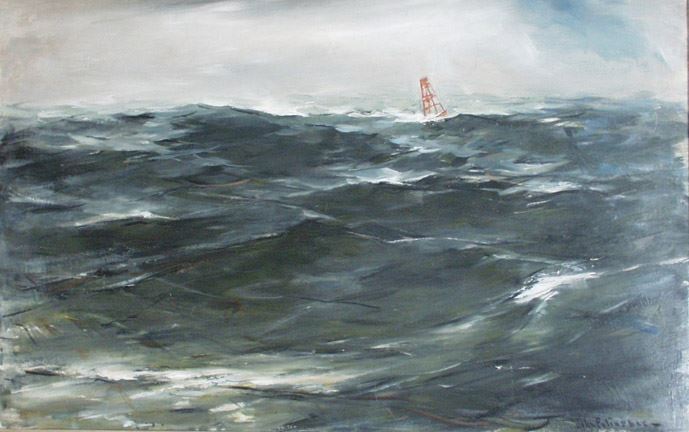
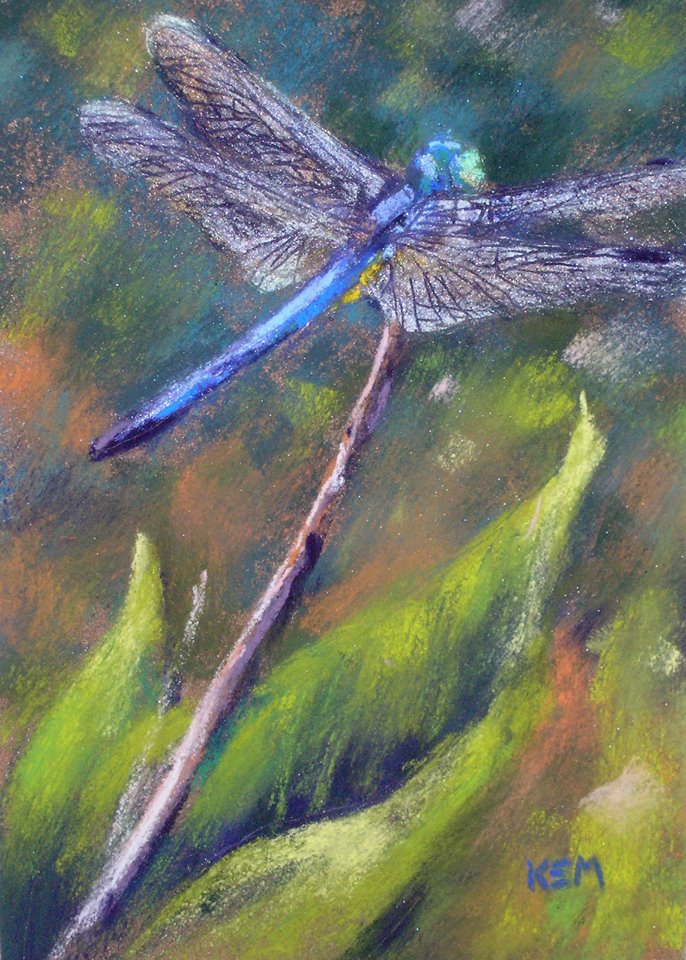
It is hard, inland, in winter.
When the fields are motionless in snow
to remember waves, to remember the wide, sloshing immensity

of the Atlantic, continuous, green in the cold, taking snow
or rain into itself,

to realize the endurance of the tilting bell buoy
(hour by hour, years through) that clangs, clangs,

from land; even in storm and night-howling
snow, wet, red, flashing
to mark the channel. Some things
are, even if no one comes.

13321611_1689202038021019_2142326571189921147_n.jpg

Entry XLVIII – March

Annabel Lee
Edgar Allen Poe

It was many and many a year ago,
In a kingdom by the sea,
That a maiden there lived whom you may know
By the name of Annabel Lee;
And this maiden she lived with no other thought
Than to love and be loved by me.

I was a child and she was a child,
In this kingdom by the sea;
But we loved with a love that was more than love-
I and my Annabel Lee;
With a love that the winged seraphs of heaven
Coveted her and me.

And this was the reason that, long ago,
In this kingdom by the sea,
A wind blew out of a cloud, chilling
My beautiful Annabel Lee;
So that her highborn kinsman came
And bore her away from me,
To shut her up in a sepulchre
In this kingdom by the sea.

The angels, not half so happy in heaven,
Went envying her and me-
Yes! – that was the reason (as all men know,
In this kingdom by the sea)
That the wind came out of the cloud by night,
Chilling and killing my Annabel Lee.

But our love it was stronger by far than the love
Of those who were older than we-
Of many far wiser than we-
And neither the angels in heaven above,
Nor the demons down under the sea,
Can ever dissever my soul from the soul
Of the beautiful Annabel Lee.

For the moon never beams without bringing me dreams
Of the beautiful Annabel Lee;
And the stars never rise but I feel the bright eyes
Of the beautiful Annabel Lee;
And so, all the night-tide, I lie down by the side
Of my darling- my darling- my life and my bride,
In the sepulchre there by the sea,
In her tomb by the sounding sea.

13346339_1689202628020960_2823937706843681700_o.jpg

Entry XLVII – February

Excelsior
Henry Wadsworth Longfellow

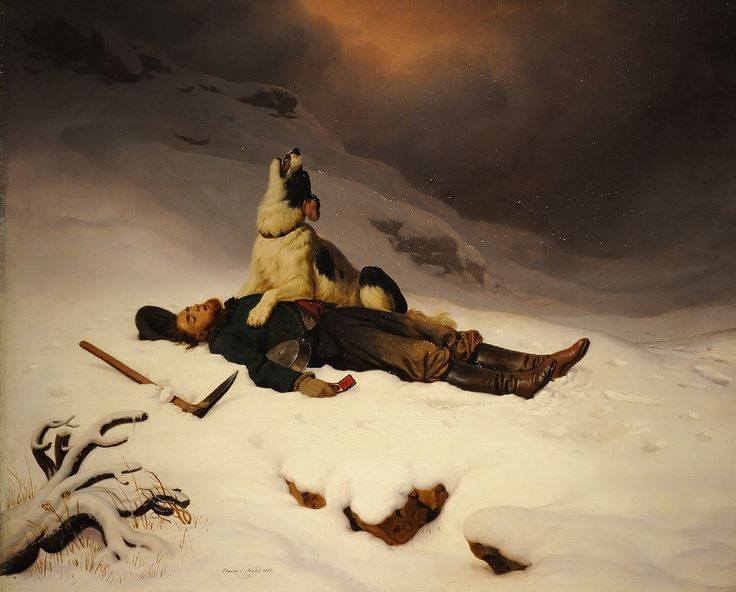
A traveller, by the faithful hound,
Half-buried in the snow was found,
Still grasping in his hand of ice
That banner with the strange device,
Excelsior!

There in the twilight cold and gray,
Lifeless, but beautiful, he lay,
And from the sky, serene and far,
A voice fell like a falling star,
Excelsior!

13173822_1679386719002551_7816776310845772373_n.jpg

Entry XLVI – February

Ungainly Things
Robert Wallace

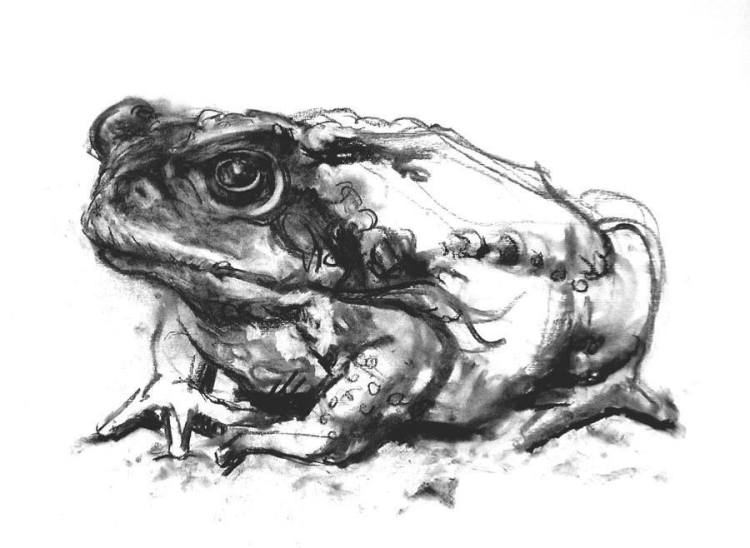
A regular country toad—pebbly,
squat,
shadow-green
as the shade of the spruces
in the garden
he came from—rode
to Paris in a hatbox
to Lautrec’s
studio (skylights
on the skies of Paris)
and stared
from searchlight eyes,
dim yellow; bow-armed,
ate
cutworms from a box,
hopped
occasionally
among the furniture and easels,
while the clumsy little painter
studied
him in charcoal
until he was beautiful.
One day
he found his way
down stairs toward the world
again,
into the streets of Montmartre,
and, missing him, the painter-dwarf
followed
peering among cobbles,
Laughed at, searching
until long past dark
the length of the Avenue Frochot,
over and over,
for the fisted, marble-eyed
fellow
no one would ever see again
except
in sketches that make ungainly things beautiful.

13325449_1689205494687340_120975562170764000_n.jpg

Entry XLIV – February

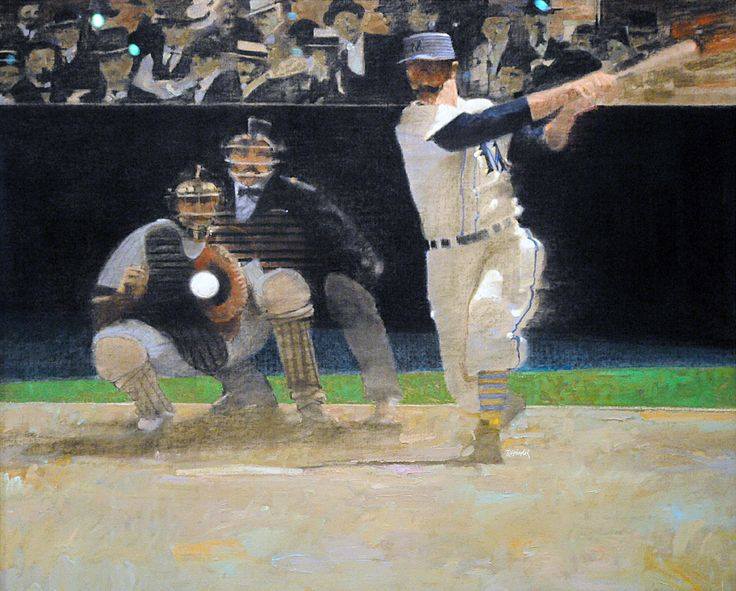
Casey at the Bat
Ernest Lawrence Thayer

The outlook wasn’t brilliant for the Mudville Nine that day;
the score stood four to two, with but one inning more to play.
And then when Cooney died at first, and Barrows did the same,
a sickly silence fell upon the patrons of the game.

A straggling few got up to go in deep despair. The rest
clung to that hope which springs eternal in the human breast;
they thought, if only Casey could get but a whack at that –
they’d put up even money, now, with Casey at the bat.

But Flynn preceded Casey, as did also Jimmy Blake,
and the former was a lulu and the latter was a fake,
so upon that stricken multitude grim melancholy sat,
for there seemed but little chance of Casey’s getting to the bat.

But Flynn let drive a single, to the wonderment of all,
and Blake, the much despised, tore the cover off the ball;
and when the dust had lifted, and the men saw what had occurred,
there was Jimmy safe at second and Flynn a-hugging third.

Then from five thousand throats and more there rose a lusty yell;
it rumbled through the valley, it rattled in the dell;
it knocked upon the mountain and recoiled upon the flat,
for Casey, mighty Casey, was advancing to the bat.

There was ease in Casey’s manner as he stepped into his place;
there was pride in Casey’s bearing and a smile on Casey’s face.
And when, responding to the cheers, he lightly doffed his hat,
no stranger in the crowd could doubt ’twas Casey at the bat.

Ten thousand eyes were on him as he rubbed his hands with dirt;
five thousand tongues applauded when he wiped them on his shirt.
Then while the writhing pitcher ground the ball into his hip,
defiance gleamed in Casey’s eye, a sneer curled Casey’s lip.

And now the leather-covered sphere came hurtling through the air,
and Casey stood a-watching it in haughty grandeur there.
Close by the sturdy batsman the ball unheeded sped–
“That ain’t my style,” said Casey. “Strike one,” the umpire said.

From the benches, black with people, there went up a muffled roar,
like the beating of the storm-waves on a stern and distant shore.
“Kill him! Kill the umpire!” shouted someone on the stand;
and it’s likely they’d have killed him had not Casey raised his hand.

With a smile of Christian charity great Casey’s visage shone;
he stilled the rising tumult; he bade the game go on;
he signaled to the pitcher, and once more the spheroid flew;
but Casey still ignored it, and the umpire said: “Strike two.”

“Fraud!” cried the maddened thousands, and echo answered fraud;
but one scornful look from Casey and the audience was awed.
They saw his face grow stern and cold, they saw his muscles strain,
and they knew that Casey wouldn’t let that ball go by again.

The sneer is gone from Casey’s lip, his teeth are clenched in hate;
he pounds with cruel violence his bat upon the plate.
And now the pitcher holds the ball, and now he lets it go,
and now the air is shattered by the force of Casey’s blow.

Oh, somewhere in this favored land the sun is shining bright;
the band is playing somewhere, and somewhere hearts are light,
and somewhere men are laughing, and somewhere children shout;
but there is no joy in Mudville — mighty Casey has struck out.
13335513_1690020427939180_5897103098178051985_n.jpg

Entry XLIII – February

Meeting at Night
Robert Browning

I
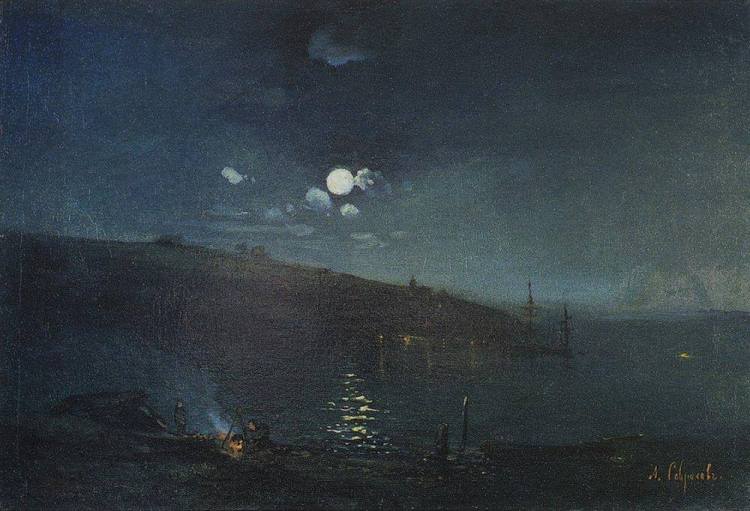
The grey sea and the long black land;
And the yellow half-moon large and low;
And the startled little waves that leap
In fiery ringlets from their sleep,
As I gain the cove with pushing prow,
And quench its speed i’ the slushy sand.

II
Then a mile of warm sea-scented beach;
Three fields to cross till a farm appears;
A tap at the pane, the quick sharp scratch
And blue spurt of a lighted match,
And a voice less loud, thro’ its joys and fears,
Than the two hearts beating each to each!

13346390_1690362507904972_1650824648020274732_o